

Kastella Piraeus neighbourhood is a hillside district of Piraeus, built on Prophet Elias Hill above Mikrolიმano and the coast. Its uphill lanes lead to hilltop landmarks and views, while central Piraeus and transport connections are within reach.
- Setting: Prophet Elias Hill, overlooking Mikrolimano, the Piraeus coastline, the Athenian Riviera and the sea.
- Terrain: Uphill alleys and stairs, with Papanastasiou Avenue along the lower level.
- Hilltop stops: The Church of Prophet Elias, its grove and Veakeio Theatre.
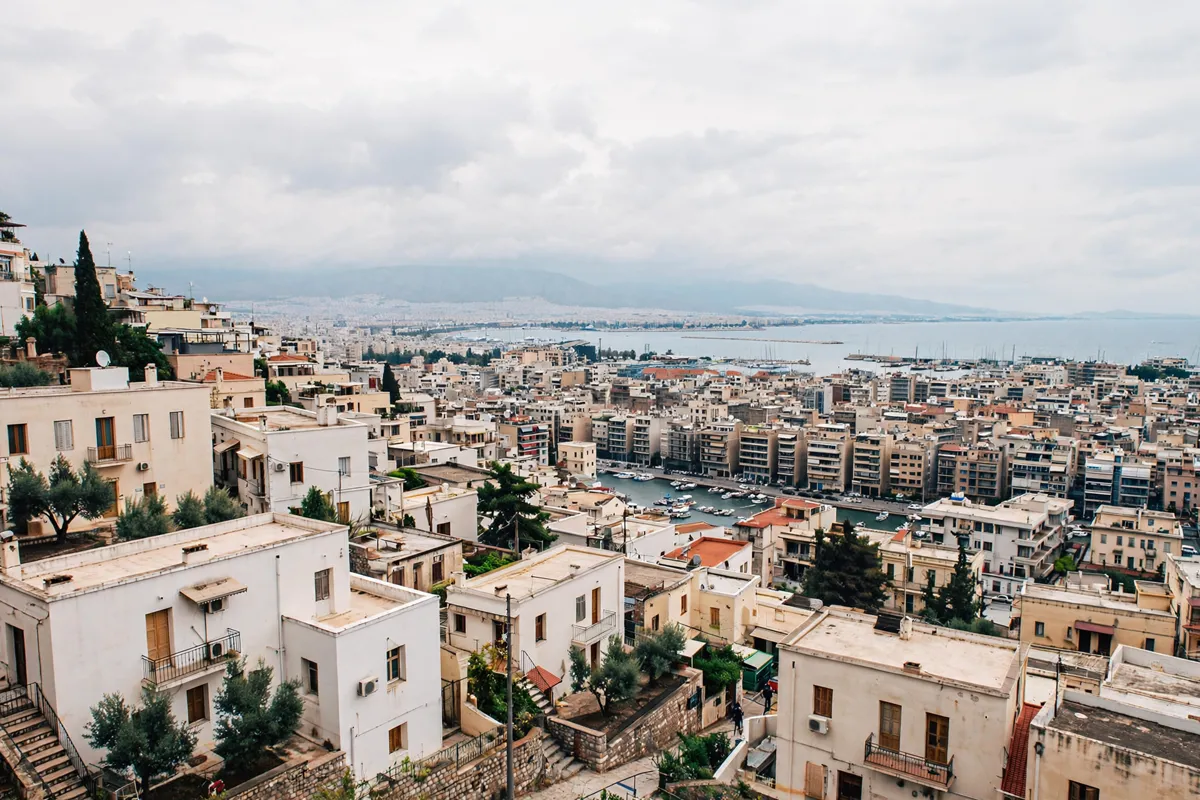
Where Kastella sits within Piraeus
Kastella occupies Prophet Elias Hill, rising above Mikrolimano and the Piraeus coastline. From the hilltop, views take in the Athenian Riviera and the sea, as well as the harbour below.
Mikrolimano means “little port” and lies beneath Kastella. Down the hill, Papanastasiou Avenue marks the neighbourhood’s lower edge; the avenue’s sidewalk offers views of Mikrolimano, the sea and Kastella’s houses.
Kastella’s position makes it feel distinct from the more level parts of Piraeus, but it remains part of the city. South of Korai Square, Piraeus’s shopping area is mostly pedestrianised.
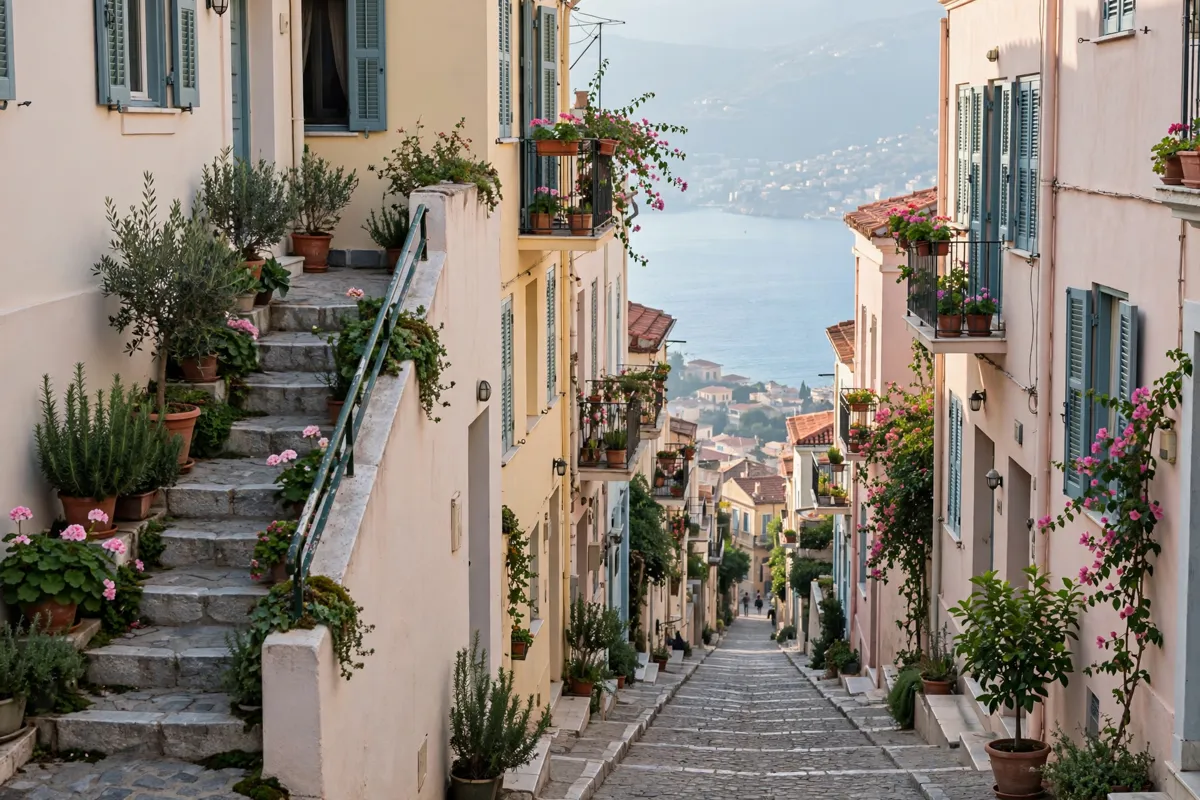
The neighbourhood’s hillside streets and views
Kastella’s streets climb Prophet Elias Hill through alleys and stairs, so expect a change in level as you move between the lower avenue and the hilltop. Its streets and routes include Papanastasiou Avenue, Vasilissis Georgiou B’—renamed Koundourou Manousou—and the Sfakion-Herakliou-Aeantos and Idis-Riga Fereou-Haniwn routes.
Foskolu Street leads into the hillside from the “Skalakia” stop on Papanastasiou Avenue. Aischylou, Falirow, Chaiden, Agisilaou and Agamemnonos are also access routes or lanes. The street pattern gives you several ways to approach the upper neighbourhood, but the climbs and steps are part of getting around.
Kastella’s hillside setting also shaped its history. In the 19th century, affluent urban residents, merchants, bankers and politicians chose the neighbourhood, including people from Athens who came for summer holidays. Architect Ernest Ziller discovered Kastella in 1875. A fortress commander recorded ruins of the ancient Acropolis at the hilltop and a Dionysiac Theatre to its northwest in 1852.
How do you walk between Kastella and central Piraeus?
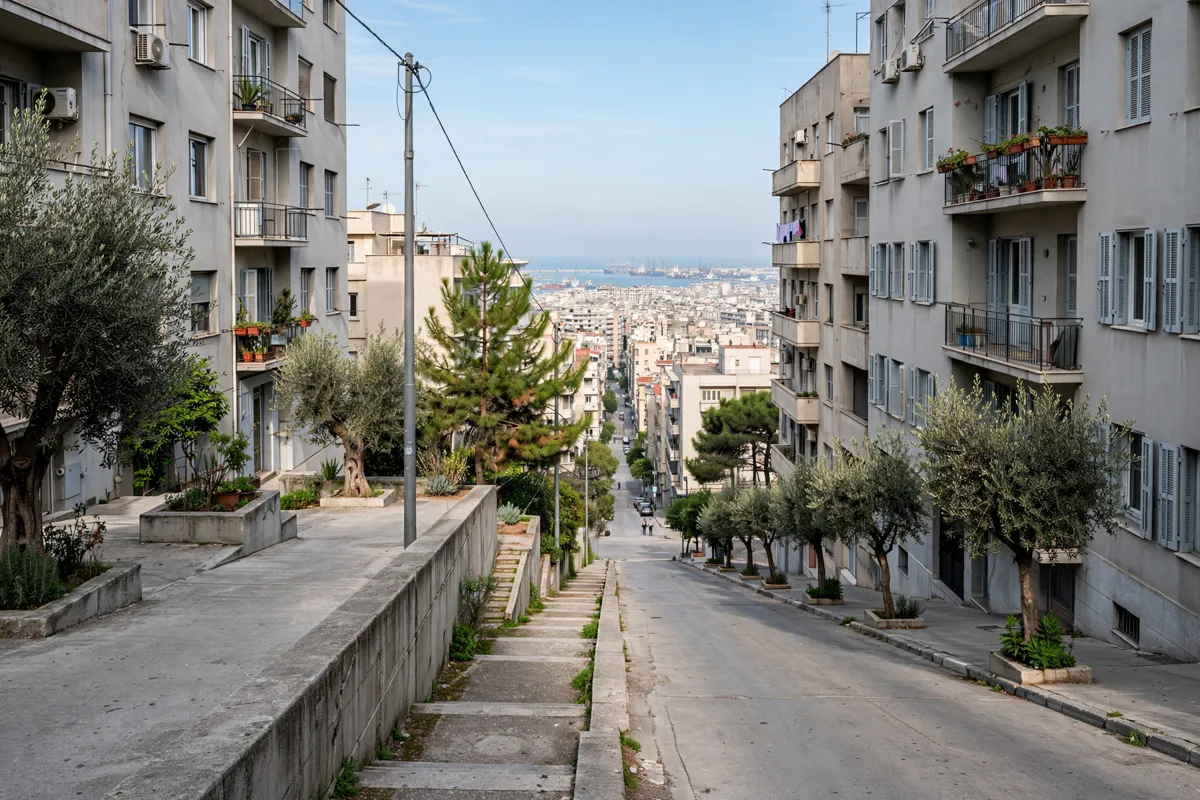
Walking from Kastella toward central Piraeus takes you downhill toward the city’s more level streets and shopping area. The terrain changes along the way: uphill lanes and stairs give way to the lower route around Papanastasiou Avenue.
For a route focused on the connection between the neighbourhood and the city centre, the Piraeus walking tour from Kastella to the city centre follows that same pairing of hillside and urban streets.
Plan your outing around the climb back into Kastella. The neighbourhood is recommended for an afternoon visit, with time to stay for sunset; there is no fixed duration for exploring it.
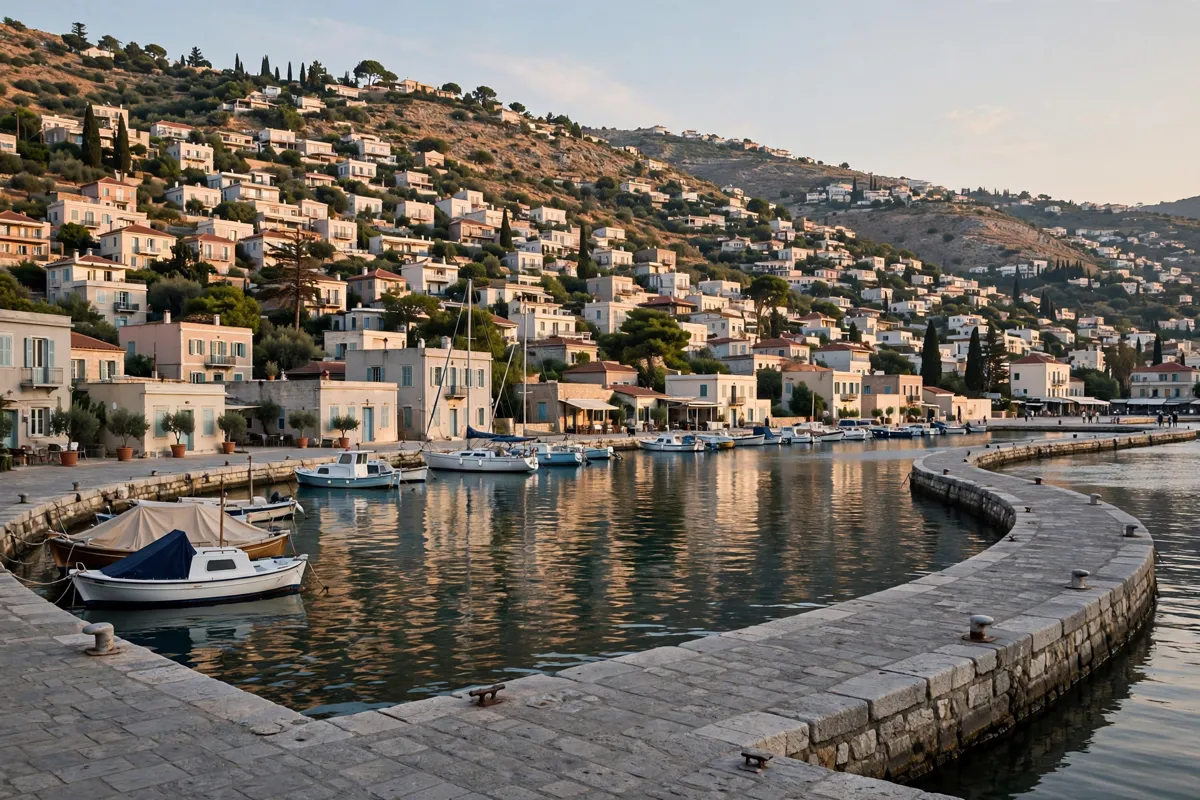
Nearby cultural and waterfront stops
At the top of Prophet Elias Hill, the Church of Prophet Elias and its grove sit alongside Veakeio Theatre. Veakeio is an open-air theatre where the Municipality of Piraeus organizes performances every summer.
Below the hill, Mikrolიმano brings the neighbourhood down to the waterfront. You can combine a walk along the lower edge of Kastella with time by the port, then take the hillside route back up.
For a wider day in the city, the Piraeus one-day itinerary includes the neighbourhood in a broader look at what to do in Piraeus.
Transport connections to know
From The Alex Monte Kastella Santikos Collection, Δημοτικό Θέατρο station is about 25 minutes on foot or about 5 minutes by car. Athens Metro Line 3 connects Piraeus with Syntagma Square in 20 minutes, and bus 040 runs between Piraeus and Syntagma Square 24 hours a day.
Most Athens buses and trolleybuses run daily from 5 a.m. to midnight; some routes run all night on Saturdays. Check the timetable for your route.
Practical considerations for getting around
Kastella’s uphill alleys and stairs make the terrain an important part of planning a walk. Use the lower-level Papanastasiou Avenue as a reference point, then allow for the climb when heading toward the Church of Prophet Elias, its grove or Veakeio Theatre.
Metro and bus schedules can vary by route, so check the official site before you go. For airport arrivals, the guide to getting from ATH to Piraeus covers the connection.
FAQs
What is Kastella known for?
Kastella is a hillside neighbourhood built on Prophet Elias Hill, with views over Mikrolimano, the Piraeus coastline, the Athenian Riviera and the sea.
Is Kastella flat?
No. The neighbourhood has uphill alleys and stairs, with Papanastasiou Avenue running along its lower level.
What is at the top of Prophet Elias Hill?
The Church of Prophet Elias and its grove are at the top, alongside Veakeio Theatre, an open-air performance venue.
Can you combine Kastella with a day in Piraeus?
Yes. Kastella’s hillside streets, Mikrolimano and central Piraeus can be included in a city day; the Piraeus day itinerary covers a wider visit.